
「子どもの権利」を保障する総合的な条例を制定した自治体の数
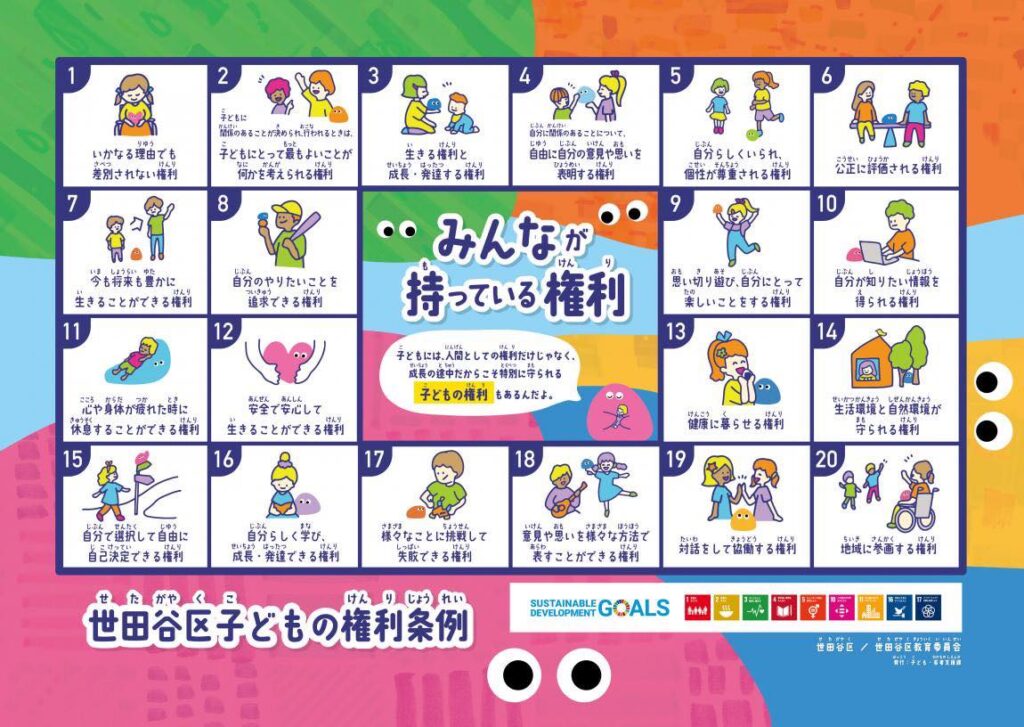
2026年1月現在、「子どもの権利」を保障する総合的な条例を制定した自治体の数が、91になったそうです。
子どもの権利条約総合研究所HP:
https://npocrc.org/data/
国連が規定する子どもに保障されている「まち」とは、
次のようなまちであるとされています。
「子どもにやさしいまち」
(1)子どもがまちについての決定に影響を及ぼせる
(2)自分たちが望むまちのあり方について子どもが意見を表明できる
(3)子どもが家庭・コミュニティ・社会生活に参加できる
(4)子どもが保健ケア・教育・住居といった基本的サービスをうけられる
(5)子どもが安全な水を飲み、適切な衛生設備にアクセスできる
(6)子どもが搾取・暴力・虐待から保護される
(7)子どもだけで道を安心して歩ける
(8)友だちと会い、遊べる
(9)植物や動物のための緑のスペースをもてる
(10)汚染されていない環境で暮らせる
(11)文化的・社会的イベントに参加できる
(12)民族的出身、人種、所得、ジェンダー、障害にかかわらず、すべてのサービスにアクセスできる平等な市民でいられる
少子化により、子ども1人に対する大人の数が激増しました。子どもの周りにいる大人たちが、より強く意識して「子どもにやさしいまち」を作っていく必要があるのだと思います。
As of January 2026, the number of Japanese municipalities that have enacted comprehensive ordinances guaranteeing “children’s rights” has reached 91.
Children’s Rights Convention Research Institute Website:
https://npocrc.org/data/
”A child-friendly city“ is a city or community aiming to
become a place where children:
ーAre safe and protected from exploitation, violence and abuse;
ーHave a good start in life and grow up healthy and cared for;
ーHave access to essential services;
ーExperience quality, inclusive and participatory education and skills development;
ーExpress their opinions and influence decisions that affect them;
ーParticipate in family, cultural, city/community and social life;
ーLive in a clean, unpolluted and safe environment with access to green spaces;
ーMeet friends and have places to play and enjoy themselves;
ーHave a fair chance at life regardless of their ethnic origin, religion, income, gender or ability.
Due to the declining birthrate in Japan, the number of adults per child has skyrocketed. I believe the adults surrounding children must become more consciously committed to creating a child-friendly community.
#子どもの権利条約 #子どもの権利条例 #子ども #子どもの権利